

High School Varsity Bass Teams
- kristopherbmartin
- Jul 21, 2025
- 10 min read
Updated: Jul 21, 2025
It’s Not Point A to B.
As a varsity high school sport, bass fishing is relatively new to Vermont. As of a couple years ago, I was new to being a coach. I expected it to be relatively easy to put a team together for a chance at a state championship. Over the past couple of years my ideas have remained malleable in some areas while in others become more concrete. I have many reasons for this. This blog post is for student-athletes, their coaches, school administrators and the parents of student-athletes. There may be some things that you disagree with and some things you like. I’ve been thinking about writing something like this for a long time and hope it provides a measure of confidence should you desire to start a program at your school or allow your child to take part.
In the interest of full disclosure, a little about me.

I am 52 years old and live in Central Vermont. I am a dad. I have worked in the healthcare field for over 20 years – mostly mental health. I have been in almost every high school in the state of Vermont at least once (and some of them many more) covering sports for local newspapers. I am the president of the Champlain Valley B.A.S.S. Club and have competed in club-level bass tournaments for nearly 20 years. I have also traveled, fishing as a co-angler on larger tournament circuits. Occasionally I’ll jump in some local pay-for-play open tournaments. Bass fishing is a part of who I am along with having a dog and enjoying pizza.
Coaches
1 - I strongly suggest that in addition to some on-the-water instruction that coaches make time for some classroom instruction. If you don’t cover simple basics in the classroom you will essentially become babysitters on the water instead of coaches. Things like knot-tying, proper use and care of fishing equipment and lure selection can all be taught off the water – and should be. Failure to do so in advance of a tournament will frustrate you to no end.
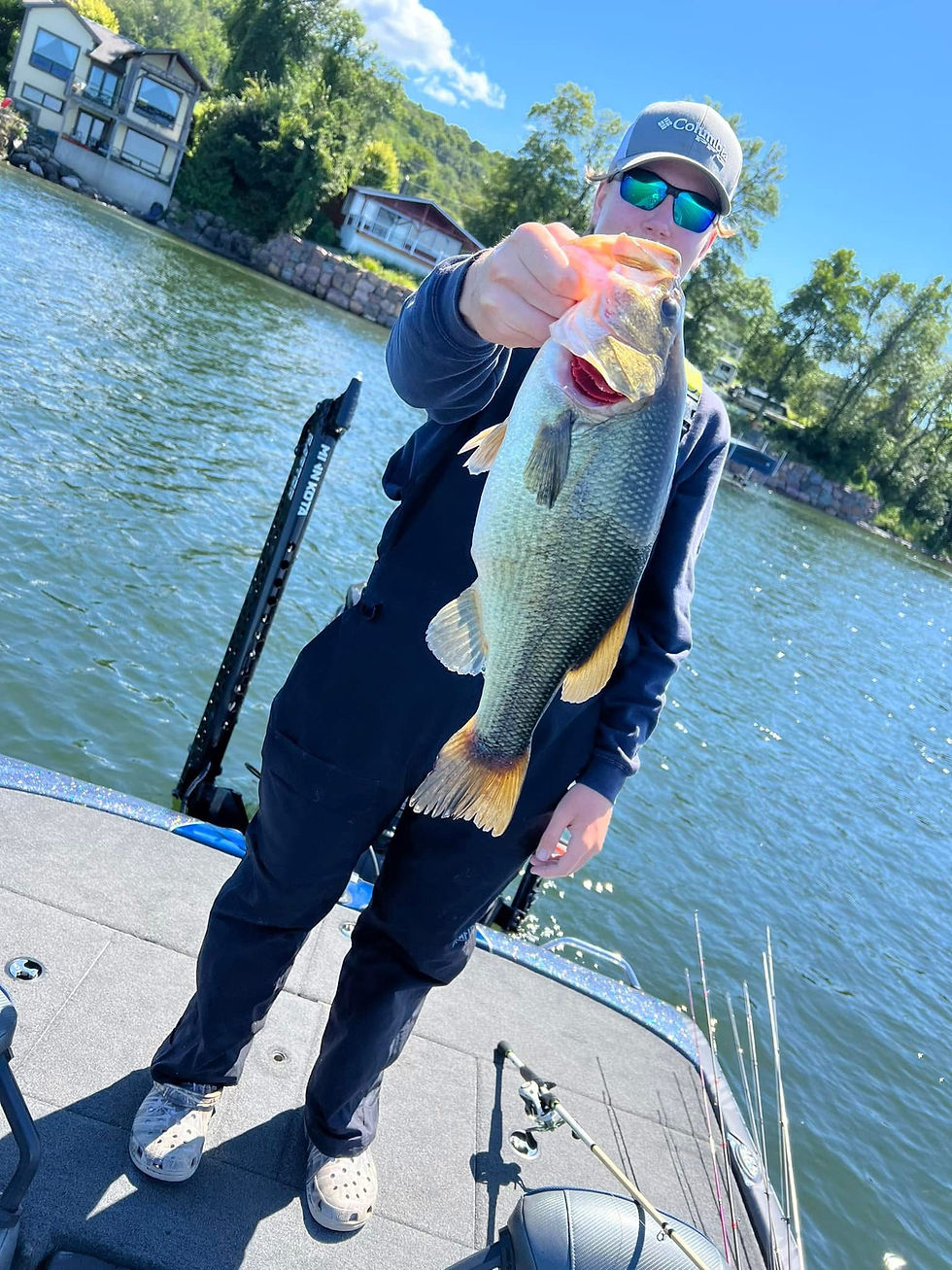
2 – Make the time to get each team member on the water. There is no better place to put theory in to practice. I make every effort to spend at least one eight-hour day per year on the water with each of my student-athletes. Schedules, jobs, and family activities make this difficult at times but if you can manage to include a team member or two on a trip to the lake the dividends will show on tournament day.
3 – Meet the parents. Talk to them. Talk to your parents with their student-athletes. Involve the parents in the schedules in order for them to understand that this is a varsity sport and not a day at camp. The goal of putting a team together is to win a state championship. Yes, it’s supposed to be fun, but it’s not just “something to do”. As a coach, I don’t have time for that. That is what parents are for. I know that it’s not realistic to win every tournament, but I do expect improvement towards becoming a respectable tournament bass angler. Just like any other coach, I know who wants to be here and who is not really interested.

Admin/Athletic Directors
1 – Rare is the high school athletic director who even knows what tournament bass fishing is. I have met quite a few AD’s in my time and doubt very seriously that any have competed in a bass fishing tournament. I would however love to be proven wrong and learn some new information. You’re going to get three types of applicants to be a coach – A faculty member who is a competitive bass angler, the parent of a student who wants there to be a bass team at your school and someone like myself who enjoys competitive bass fishing and enjoys teaching. There’s a fourth type of applicant that you don’t want and their resume/curriculum vitae will be a dead giveaway as to why. Trust your gut if you really want to build a program and aren’t just going through the motions.
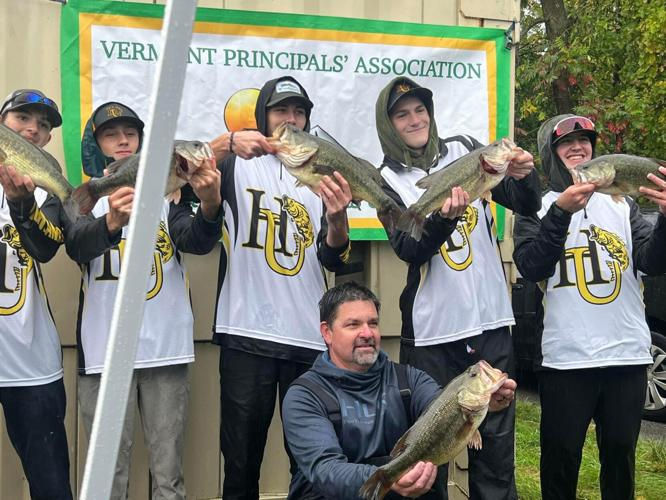
2 – Go fishing with your coach. Get to know them. Gain a better understanding of what bass fishing is - even if it’s not during a tournament. Drop in for a session or two of the classroom experience. Bring a few pizzas for the team. Take part in the learning of some of the skills required. Tournament bass fishing is not the simple task of putting a worm on a hook. Live a little. Gain an appreciation for the sport and the ability to explain it to interested students.
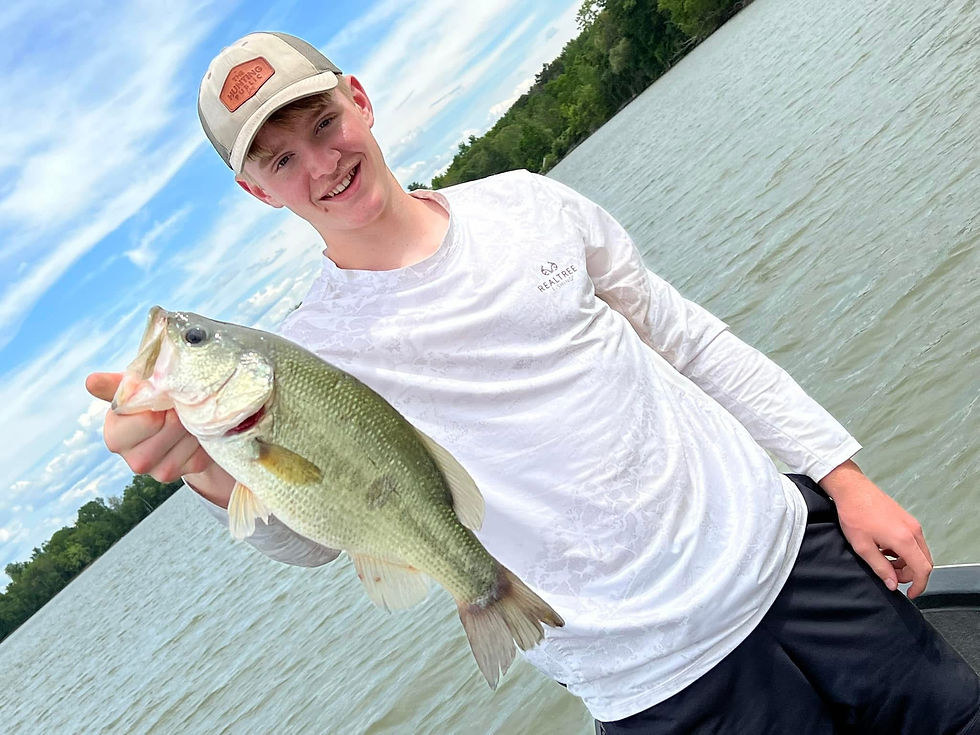
3 – Limit your team size. Some schools are lucky to have a pair of anglers while other teams are fortunate to have 10 or more. The more anglers you have that want to fish, the more assistant coaches with boats you’re going to need (as well as pizza). Per the rules set down by the Vermont Principals Association (VPA) each school can have two teams – a varsity composed of four anglers and a junior varsity composed of four anglers. Each VPA sanctioned tournament is approximately seven hours long. You can only have two anglers in a boat at any one time, so that means that during a tournament a coach or assistant coach will have to ferry anglers back to the launch and pick up new anglers at some point during the day - which actually takes time away from fishing. Every coach wants all their team members to compete all day, every day but if your team has a lot of members, everyone is going to be disappointed with their lack of time on the water. I reserve my varsity squad to fish all day with no returning to swap anglers out. With my JV squad I split the day. The Varsity and JV squads are interchangeable for me and I put my best varsity anglers out there with one goal – win the tournament. In the event of injury, illness or family emergency I can move a JV athlete up to Varsity so that my team is always able to compete for a title. If my school is fortunate enough to have a few people willing to run boats for all my team members (JV and Practice Squad) everyone will fish the events in order to gain experience. Only the varsity team can win a state championship in Vermont though. I’ve got a friend who is fond of the saying - “Every fish is a trophy, but some are participation trophies.” I believe that if someone works hard, success will follow. I do not believe that doing the minimum is worthy of a reward. Sorry, not sorry.

4 – My assistant coaches each own boats and have completed the required background checks and purchased insurance in order to operate as boat captains for competing student athletes. I strongly suggest that if you plan on fielding a team, you consider this when setting your team expenses. A good coach will be willing and able to plan accordingly and a good athletic director will guide the coach and their assistant(s) in order to be above board in all requirements. The earlier this is accomplished, the smoother the season will go. Don’t wait until tournament day. Good coaches provide great assistant coaches. Trust their judgment and get to know them. *In many cases the assistants will be even more accomplished than the coach, and if for some reason your coach leaves you’ll have a talent tree available to offer the head coaching position to.


*A coach who is only there to support their child through the high school years is not representative of long-term commitment. My daughter graduated in 2015 and I didn’t start coaching until 2023. I have mentored many student-anglers through my bass club since 2018. Find a coach who is not there out of obligation to family. Find someone who wants to build a program – not a stopgap. They will be there until they can’t be there, and if for some reason they move on, they will provide a list of names that they trust to continue the program. (See above, 4)
Student-Athletes
1 – You don’t know more than your coach. Be open to new experiences and willing to try techniques that you haven’t before. Your coach is there to challenge you, and they can tell if you’re listening – or not. My goal as coach is to educate you in order for you to be able to teach others. I am not set in my ways, but I do have decades of experience that you do not. If you want to know the reasons as to why I do or teach things a certain way – ask. The way programs are built determines whether a team is successful for a year or a decade. I want my student-athletes to be able to teach basics to new team members so that I can concentrate on tournament strategy and the introduction of new ideas (and pizza). If I have to teach everyone how to tie knots, wear a life-vest, or put line on a reel we’ll always be starting from square one each year. Learn in order to teach others.

2 – Your coach doesn’t have to be here – they choose to. Don’t let them choose a reason to not want you either. I’m not above having a little fun but I do have a few requirements:
- Compete as a team
- Win or loss, be gracious – as a team
- Sportsmanship and professionalism above all else (polite and helpful)
- Be willing to ask questions

3 – As representatives of your school it is expected that you are punctual, both to practices and to tournaments. You earn your position on the team – varsity, junior varsity and practice squad and the most important component other than showing up is being on time. It shows that you want to be here and that you want to be challenged.

4 – Don’t be afraid to have fun. Personality is everything in life.
5 – Do no harm.
6 – I am willing to teach you whatever you want to learn – how to launch a boat and then put it on a trailer, how to back a boat down a ramp, mapping, graphing, any bass fishing technique you want to learn, netting a fish, livewell care and operation. You name it; I’ll try to teach it to you. And, if I don’t know something, I’ll find a person who does and they can teach both of us.

7 – Bass fishing as a high school varsity sport can lead to many different opportunities. Many colleges actively recruit for their collegiate level teams. For students considering environmental sciences (physics, biology, meteorology, geography, soil science, mineralogy, oceanography and many, many others) degree programs in college the experiential learning that takes place while fishing can expose a student to real world instances where that technology is used, studied or developed.
Parents
1 – Get to know the coach and their assistants by first name, and trust that they have your child’s best interest at heart. The coaches are not babysitters and if you’d like to learn what’s being taught I’m sure they’d be willing to have you attend a classroom practice and/or provide pizza.
2 – Understand that there are some costs associated with being on the bass team. Rods, reels, terminal tackle and lures are not provided by the school. With any sport, the parents provide much of the gear, especially for younger athletes. A coach will make some of their stuff available at times, but it’s expected that as the knowledge base of your child expands, they are going to want what they need in order to fish bass tournaments. Hockey parents know this all too well as they’re the ones who often lend financial support to their children for everything from pads to skates and sticks. They’re also the ones who are up at 4:00AM on their days off to drive to some ice rink in the middle of nowhere just for some ice time. Tournament bass fishing is expensive, and that’s without a boat payment, insurance, tow vehicle and gas money. It can seem like a rabbit hole that money gets thrown in to. And, everyone knows how teenagers can eat. Wait until you get the bills for boat snacks.

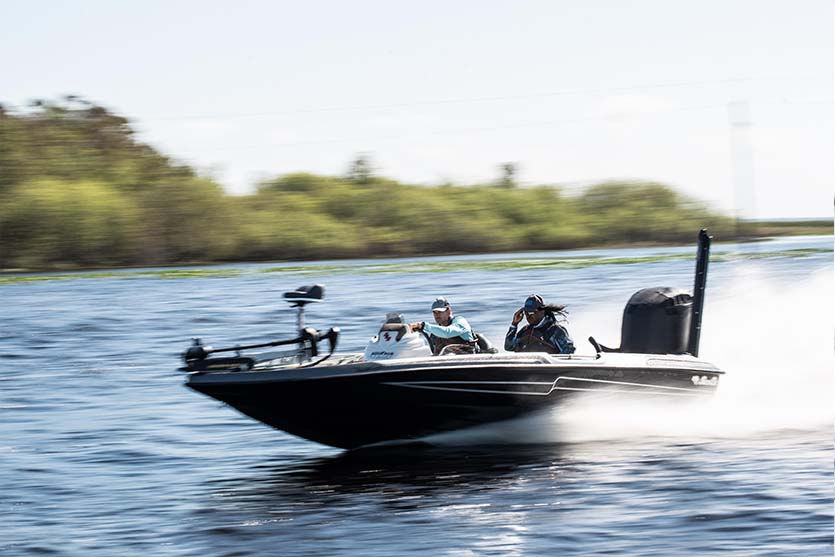
3 – Safety is rule #1. It also happens to be rules 2, 3 and 4. Rule #5 states - “If you don’t like any of the previous four rules, go back and read them again.” Yes, the boats are fast and they are used on water. Every athlete must wear his or her PFD at all times during a tournament. Boat captains are expected to operate their boats at safe speeds. Every coach is CPR certified. Some, like myself are also certified to use an AED, can provide first aid and even having trauma training – both physical and emotional.
4 – Experience with bass fishing matters, but the desire and ambition means just as much, at least to me. As a freshman on a short-staffed squad your child may have the opportunity to fish right away, regardless of whether they can tie knots or choose correct techniques. As a first year senior, your child may still be relegated to the practice squad in order to learn more and improve skills. If a college recruiter asking about “so-and-so angler” on my bass team ever calls me, I’m going to tell them the truth. It hasn’t happened yet – but it might. I also reserve the right to dismiss anyone from my teams at any time. Once is a mistake, twice is a rebuttal, but three times is a pattern. My trust, like that of a teammate’s has to be earned. There’s always someone willing to step up. Always.
5 – I provide updates and feedback to my athletes. I want them to feel like they’re progressing. I sincerely hope that they share that with their parents. A majority of our off-the-water communication is ferried through the team captain. It is my job to keep everyone informed to the why’s, when’s and where’s of practice or tournament day but it’s the team captain who reminds other members to be prepared and model proper behavior. A good team captain recognizes the ability of others even if it limits their time on the water. A good leader encourages others in the face of adversity and shows them how to overcome it.

I have spent a lot of time thinking about this and how to present it clearly and concisely. I wanted it to serve as a template of sorts, but also as something to reflect upon over time. Over time I’m sure I will update it and add a few things here and there. Many of my fellow coaches have thoughts as well and I respect their observations and input.



Comments