

It’s a Two-Way Street
- kristopherbmartin
- Jul 24, 2025
- 12 min read
What I Learned Coaching High School Bass Fishing
I’ve been able to reflect back on a couple years of coaching at this point. While I can’t say that I was surprised or shocked by anything I learned early on I can say that I needed to start from square #1. When developing a program – one that I wanted to last a long time, I was going to have to introduce what I’ve come to call “linear basics”, or “establishing a baseline”. Student-athletes arrive for the first day of practice with what only they know. Most often their entire knowledge of tournament bass fishing is either from a few short clips they’ve seen on television or from the Internet. A fortunate few had parents who liked to fish and educated them to what they knew. It didn’t take me long to realize that their experience levels were all over the place and while there were a few sniffs of reality related to tournament fishing, the learning curve was going to be steep. Not just for my team, but for myself as well.
In my first year I just tried to wing it and get through by taking them fishing a few times to see what I was working with and in all honesty I ended up doing much more for my team members than any coach should have to do. If only Ihad put more thought in to it and realized a few things earlier.
“I shouldn’t be tying knots for these kids.”
“I shouldn’t be using our time on the water for teaching basics.”
“This is going to go a bit deeper in to instruction than I thought.”

I had one angler who kept setting the hook only to lose every fish that he hooked. And I do mean every fish. After a while I finally asked to take a look at his setup. It was a 6’6” spinning setup – pretty basic. The line he had on it was a little heavier than necessary but he was getting bites. I tied on another jighead and attached a soft plastic trailer. I then tested the stretch and the line just crumbled in my hand. I did it a few more times before looking at him and grabbed one of my rods.
“How old is that line?”
“I dunno. Five, maybe six years old.”
“That’s your problem. The line is dry and brittle. Zero stretch with no integrity.”
“Really?”
“Sorry but that’s not gonna’ cut it. None of the fish you hooked were ever going to make it to the boat.”
After handing him one of my setups his catch rate improved significantly. It was then that I realized that as a team we needed to take a step back and start with gear prep off the water before moving on to techniques or introducing new concepts. But, even before gear prep I had to introduce the concept of the baitcasting reel. Not one of them had any experience with it. When taking one out of my rod locker and showing it to them it may as well have been a lightning bolt. I could see the reluctance and intimidation on their faces – but also the fascination. Things were getting dangerous.

Rods, Reels, Line and Elemental Practice
If you’re going to coach a varsity bass team, you need to break this wall down. Actually, you need to kick it down, shatter it with a sledgehammer and then burn the remnants. Just don’t eat it.
In year-two I was determined that each person on my team would not only get familiar with the baitcasting setup, but that they would use them regularly and learn how to troubleshoot them. They would learn how to set the drag, set the tension and actually cast with one. I bought casting plugs and we did our work in front of the high school until everyone got it down. I then had them practice casting to smaller and smaller targets. I showed them how to deal with bird’s nests, how to let the rods load when casting, the subtle differences in rod actions and what lures they could be more efficient throwing. Wait ‘til they see what I’ve got rigged up for them this year. I’ll just say that things are going to get competitive.
My basic casting setup for the team is a 7-foot medium-heavy rod with a 6.4-7.1 gear ratio reel. When asked what my recommendation is I always give this answer first. I also instructed them to spool up with 30-pound test braid. It’s my belief that this setup can cover about 70-80 percent of whatever a high school tournament team will be doing. I like the braid because it floats and in the water we fish we seldom need to tie on a leader. It’s not always ideal, but it covers a lot of techniques and if a teammate wants to pursue something more technical, it’s on them to gear up for it. If they need another line choice, for say, throwing topwaters they can spool a second rod up with 12-14 pound monofilament, or learn to tie a Double-Uni, Alberto, or FG knot. Look ‘em up on YouTube and get to learnin’.

When it comes to spinning rods, I prefer a 7-foot medium to medium-heavy with 12-15 pound braid down to an eightor ten-pound fluorocarbon leader. On some of my spinning setups I will go straight monofilament or ‘old school’. It’s rare for me to go straight fluorocarbon on a spinning reelbecause of the memory and brittleness it can develop and because I suffer from PTSD due to the poor quality of early iterations. Thinking about them still makes me feel icky. The cost of some of the new fluorocarbon lines is also off-putting at times. Braided line can last for years and monofilament is cheap enough to replace regularly. Good quality fluorocarbon line is neither of those. You don’t need ten 200-yard spools of Seaguar Tatsu or Sunline Shooter, and especially not here in Vermont at the high school level. Wait until you get to college, and then again, you probably won’t need it there either.
The best part about both of these setups above is that they’re readily available for a reasonable price at local box stores. I do not expect parents or students to place $1000 orders from Tackle Warehouse. If the interest remains after being introduced to tournament bass fishing, then you can spend that small fortune, but it’s just not necessary at this level.

Understanding Young Anglers
There are two schools of thought on this and while I can say confidently that they’re both correct, I believe that what matters most is the experience level of your anglers.
New Anglers
I was discussing this with Olivia Baroffio, one of my assistants and she had this to say – “I think they should tie on as many different lures as they want to try and then just go out there and have at it. If they want to keep cutting lures off, let them. Just let them do what they want. You just want them to be able to explain their choice. You want them to provide reasons for what they want to try. Most importantly you want them to be able to make their own decisions independently and be able to support their theories with positive results.”
My first reaction was to kinda’ shake my head but as I was driving home after a day on the water I started to reason my way to her side. New anglers have no experience with anything, and believe me, as a high school coach you’re going to get some green team members.

What kind of teacher are you if you don’t let your students fail once in a while? So what if a kid wants to throw a Whopper Plopper in the weeds? They’re gonna’ figure a few things out quickly. They’re certainly going to get practice tying knots and start to narrow some stuff down. You’re also going to get the kid who watches someone catch a fish and wants to change his or her lure because of it. It’s a good time to sit them down and discuss what they’re hoping to accomplish by wasting time tying and retying, and visit the realm of efficient reality – which any good angler will tell you is key. They may not be able to label or quantify what they’re doing, but they should be able to explain why they’re continuing to do what they’re doing. Every person learns at a different pace and every person learns differently. This is an important thing for a coach to remember. It’s my experience that most people are visual learners – they like to be shown how to do something. In many cases, they need to be shown that something does work in order to want to learn how to replicate it for themselves.
In my first year as a coach I had two of my anglers out with me and I spent much of the morning providing instruction with mixed results. After allowing the time for them to get familiar with the boat and some of the gear I showed them a small Texas-rigged craw to which they responded with little interest. They preferred to throw Ned rigs on spinning rods in order to catch whatever was willing to bite. So, naturally the jerk that I am, I picked my rod up and tossed the craw out. On my second cast I swung a near five-pound smallmouth into the boat. After that, they were converts, willing to try anything I put in their hands. The thing is, they had to see it. I couldn’t just suggest it. There needed to be a real world, witnessed example. I did it a couple more times but finally put the rod down after piling on a bit.

This is one of the most important reasons to get on the water with your team before any tournament fishing takes place. Adolescents are concrete thinkers. You need to show them that you know what you’re talking about – and provide proof. Most of your first-year anglers will soften up when they actually witness success instead of having it relayed as a theory. They become much more willing in their attempts to fail.
Failure is paramount to learning. If everything everyone attempted went perfectly the first time we would not have professional sports of any kind. We’d all be professional-level at everything we ever tried, and therefore, average – because we’d all be just as good as each other. True success is only achieved through failure and reassessment. After that, it’s called development and evolution. If you can get your student-athletes to this point they won’t be happy with participation trophies and they’ll keep coming back.
Experienced Anglers

I’ve yet to meet a person under the age of 18 that I can confidently say is “professional-level”. I’m certain that there are some pretty good 18-year old anglers out there though. Chances are, if you have returning team members, they know what to expect and have more than rudimentary skills. If you’re lucky, they continued to refine what they know a bit by fishing over the summer break. They’re sure to have favorite techniques and familiarity with their personal fishing gear. These are the team members that should be primed to take a big step in their development.

Getting them on the water before a tournament is still extremely important though. It’s their chance to prove that they know what they’re doing and it presents opportunities to ask for reassurance that what they’re doing is being done properly. Am I tying the correct knot? Am I working this lure the right way? The big one – Should we maybe go try a different spot? These questions represent a person who is in the moment, doing what they know and reasoning their way through adversity in order to improve. I love, love, love(!) when that switch gets flipped. As a coach, it is absolutely magical. The team goes from just being happy to catch a fish to attacking the water.

With the experienced angler I always ask about what they don’t know. They’ll be more than happy to extoll the virtues of their favorite lure or talk about that time they caught a five–pounder in the middle of nowhere while eating a sandwich and drinking a Mountain Dew. I believe that the first step to enlightenment is being able to understand that you don’t know everything, and that true genius is the ability to admit it. After getting to know me a bit, I can honestly say that everyone who has ever been on my team understands why I ask this question and looks forward to the discussions that it leads to. This is the point that I like to introduce new ideas and concepts. It also gives me the opportunity to ask what it is that they want to learn and allows me to gauge whether their progress has been internally motivated or if they’re just going through the motions and expect to get better by showing up.
“One fish is luck, two is coincidence…but three is a pattern.” – Me
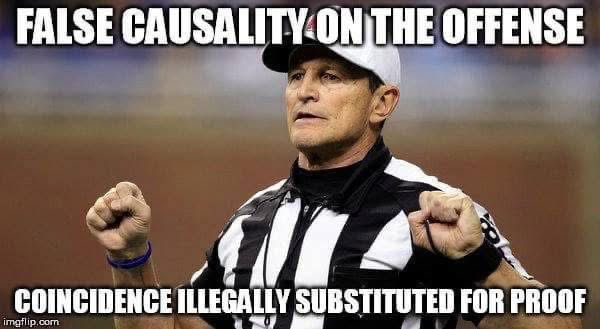
Anyone who has been in the boat with me has heard me mutter that phrase. I should copyright it. I am convinced that it will be the only point of light that people remember me for after I’m gone – if they remember me at all. The experienced angler instantly understands it though. I distinctly remember fishing a tournament with Sean Alvarez years ago and I was mildly surprised at how much he just kept saying – “Remember where you caught that one.” He said it over and over early in the day and it resonated. He preached it - paying attention to success. I started to wonder if he thought I was stupid. He wasn’t giving instructions though; he was preaching awareness and mindfulness – preparing me for readiness. I doubt that there’s a time when I’m on the water and that doesn’t echo somewhere in my head. Sometimes, it seems as if he’s standing right next to me – especially if I’m being distracted from the task at hand. The fact that I was in my thirties at the time is actually a bit embarrassing. It’s all about identifying a repeatable pattern. You have to be cognizant of what is going on around you and how it relates to improving your catch rate. You actually have to pay attention to what you’re doing in order to accomplish your goal.

The truth is, as a coach one of the most difficult things to teach is that sort of critical thinking. And it is critical. When one of your anglers is more interested in eating crackers from his coat pocket, slack-lining his jig with his rod in his armpit, you’ll understand. It is precisely that moment when the line will jump with a great pop and the fish will be missed. I only bring this up because I’ve witnessed it more times than I’d care to remember. The old saying – “hook sets are free”, should give your team the confidence to swing away if something doesn’t feel right as well. Is it a weed or is it a fish? Set the hook and find out. Preach it. You can’t miss the shots you don’t take. Michael Jordan didn’t win basketball games by not shooting. Set the hook and don’t be afraid to cross some eyes – just be aware that your jig may come flying back at a bazillion miles per hour if you’re really wrong (or extremely foolish). Be mindful and leave the crackers alone if your lure is in the water.

Review the Day
At the end of every day on the water I usually spend the ride home recounting the rights and wrongs I committed. It doesn’t matter if it’s a tournament that I fished or one that I coached in. We all replay the day over and over, good or bad, and we assess accordingly. It’s important to take stock with your team as well. To a person, each one of my athletes can walk you through, play-by-play of the one that got away or the one they put in the net – and they can almost always tell you why. The human brain is an amazing organ that catalogs so much information almost instantaneously that you have to step back sometimes in wonderment. That sort of reflection and instant recall is astounding, especially for an adolescent.

Perhaps most importantly, as a coach I have to remember that I have a lot more experience at just about everything than a high school kid does. As coaches we also have to remind ourselves that we don’t know everything that is going on in a student’s life. Our job is to teach, inspire and at some times even protect. I’m careful to always encourage my team to not just be better anglers, but people as well. Nobody is going remember the fish you caught ten years ago while you were in high school and even less will remember what sorta’ grades you got or who you hung out with. I remind them that high school is not where they’re supposed to peak. What matters is being able to share what you know and finding the fun in trying new things, even if it’s not easy.

It’s one of the many reasons I enjoy coaching as much as I do.


Comments